
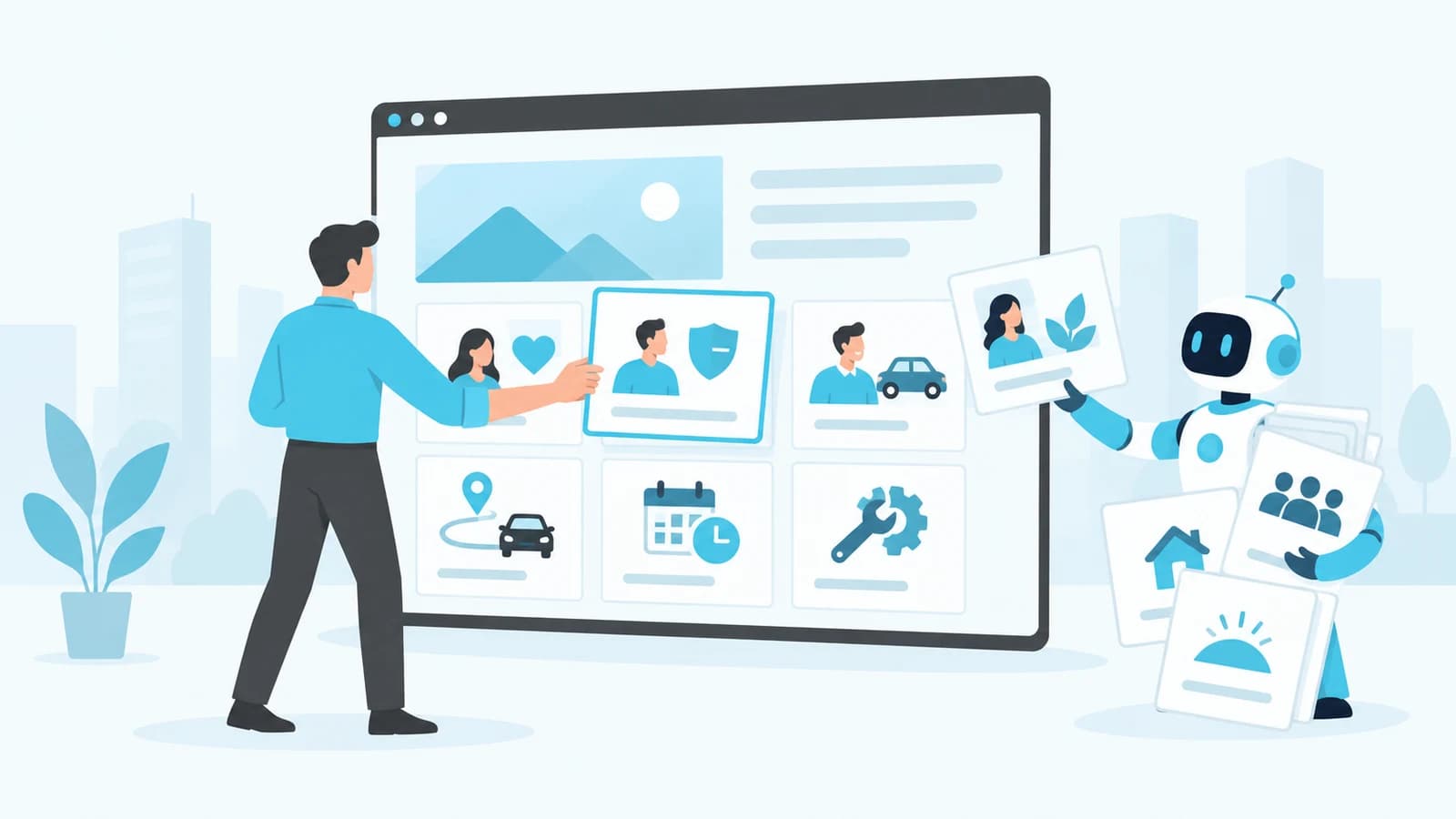
Enter a short brief and a layout, headline, and buttons quickly appear. That first AI-built draft can feel encouraging. But a finished screen does not automatically answer why customers should choose you, which services you can actually deliver, or who handles inquiries. Those decisions determine whether the website supports your business.
Decision 1: Who should this website serve first?
First-time homeowners and expansion managers at a retail chain need different information from an interior design firm. One may prioritize budget and process; the other may need evidence of delivery across locations. AI can suggest audience groups, but use actual inquiries, sales records, and service experience to choose a priority. Trying to address everyone on the homepage can leave nobody feeling understood.
Decision 2: What are you ready to promise?
Claims such as fastest delivery, nationwide service, or round-the-clock support need confirmation from the team that will deliver them. Check service scope, process, response arrangements, and limitations. Treat AI-generated copy as a draft requiring verification. Plausible-sounding testimonials, results, and client names must not be presented as facts without real evidence.
Decision 3: Which materials represent your actual work?
Concept illustrations can explain a direction; real projects help customers judge your capabilities. Label their purposes clearly. Collect photos you can publish, describe your actual responsibilities, and explain the project context. This is more useful than repeatedly asking AI to make a page feel premium. Confirm permission for customer names and unpublished material; possessing an image does not automatically grant publication rights.
Decision 4: What should a visitor do next?
If you want inquiries, decide what the form asks, who receives it, how it is handled, and what visitors see after submission. If you want bookings, define available slots and cancellation rules. Walking through the entire process often reveals that the missing piece is a responsible person, rather than another visual section. A clickable button does not prove that the service behind it is ready.
Decision 5: How will you accept the finished work?
Replace looks about right with concrete tasks: find a service on a phone, understand how to work together, submit an inquiry, and confirm receipt. Check management permissions, backups, and responsibility for updates. AI can suggest checks and flag problems, but launch decisions should follow real test results. Schedule regular reviews so the website does not keep describing services that have already changed.
Checks you can start with
- Describe one customer group you want to serve first.
- Verify every service promise, project example, and image source.
- Assign responsibility for inquiries and maintenance.
- Complete the reading-to-contact journey on a phone.
A practical next step
If AI has already produced a first draft, bring the screens, accurate service information, and your main goal. Identify the missing content and processes before deciding how much design and development support you need.
Explore our brand website and visual design services, or share your website and requirements through our contact page to discuss an appropriate scope.
Related reading
Can an AI-built website go live? Six checks before publishing
References
References checked on November 2, 2026. Situations and figures are explanatory examples, not customer results, service quotations, or performance guarantees.